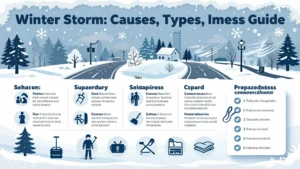
A Winter storm is more than just falling snow. It is a powerful weather event that can disrupt cities, shut down transportation, damage infrastructure, and threaten lives. From heavy snowfall and dangerous ice to extreme cold and strong winds, winter storms are among the most serious forms of natural disaster in cold regions of the world.
Every Winter season brings different levels of winter weather, but when conditions combine in the right way, a simple snow day can quickly turn into a blizzard, snowstorm, or destructive ice storm. Understanding how these storms form, their types, impacts, and how to prepare can make the difference between inconvenience and crisis.
This comprehensive guide explains the science of a Winter storm, its connection to meteorology, the risks involved, and how individuals, families, and communities can stay safe during severe winter weather.
Understanding a Winter Storm in Simple Terms
A Winter storm is a significant weather phenomenon that produces hazardous conditions during the Winter season. It usually includes one or more of the following:
Heavy snowfall
Freezing rain or sleet (forms of frozen precipitation)
Strong winds
Extreme cold
Reduced visibility
Dangerous ice buildup
Unlike ordinary snow showers, winter storms create dangerous winter conditions that affect travel, utilities, and public safety.
Key Characteristics of a Winter Storm
| Feature | Description |
|---|---|
| Temperature | At or below freezing (0°C / 32°F) |
| Precipitation | Snow, sleet, freezing rain |
| Wind | Can exceed 35 mph in severe cases |
| Visibility | Often reduced to less than 1/4 mile |
| Duration | Several hours to multiple days |
When combined, these elements create a serious winter hazard.
The Science Behind Winter Storm Formation
To understand a Winter storm, we must look at meteorology, the science of the atmosphere.
How a Winter Storm Forms
A winter storm typically forms when:
Cold air is present near the ground.
Warm, moist air moves above the cold layer.
The warm air rises and cools.
Moisture condenses and freezes.
This process creates frozen precipitation such as snow, sleet, or freezing rain.
Why Temperature Layers Matter
Different temperature layers in the atmosphere determine the type of precipitation:
- All layers below freezing → Snow (snowstorm)
- Warm layer in middle, cold at surface → Freezing rain (ice storm)
- Partial melting then refreezing → Sleet
This vertical temperature structure is crucial in predicting a Winter storm.
Types of Winter Storms
Not all winter storms are the same. They vary in intensity and impact.
Snowstorm
A snowstorm is a storm that primarily produces heavy snowfall. It can lead to:
Major snow accumulation
Road closures
Power outages
Even moderate snowstorms can create a snow emergency in large cities.
Blizzard
A blizzard is a more intense type of Winter storm. It requires:
- Sustained winds of at least 35 mph
- Visibility below 1/4 mile
- Conditions lasting at least 3 hours
Blizzards create dangerous snow drift formations and whiteout conditions.
Blizzard Facts
- Wind chills can drop temperatures far below actual air temperature.
- Extreme cold combined with wind increases frostbite risk.
- Blizzards often occur after or during heavy snowfall.
Ice Storm
An ice storm occurs when freezing rain coats surfaces with thick ice.
Dangers of Ice Storms
- Trees collapse under weight.
- Power lines snap.
- Roads become skating rinks.
Just 0.25 inches of ice accumulation can cause major damage.
Snow Squall
A snow squall is a brief but intense burst of heavy snow with strong winds.
Unlike a long-lasting storm, a snow squall:
- Develops quickly
- Reduces visibility instantly
- Causes sudden highway accidents
Drivers often underestimate these rapid winter conditions.
The Role of Arctic Blast in Winter Storms
An Arctic blast is a mass of extremely cold air moving southward from polar regions.
When an Arctic blast meets moist air:
Storm intensity increases.
Extreme cold deepens.
Wind chills become dangerous.
Arctic air can transform a simple weather system into a severe Winter storm.
Major Impacts of Winter Storms
Winter storms affect multiple sectors of society.
Transportation Disruptions
Road closures due to snow accumulation
Flight cancellations
Train service suspension
Dangerous black ice
Power and Utilities
Heavy snow and ice damage:
- Electrical grids
- Communication lines
- Water systems
Ice-coated power lines are one of the leading causes of winter outages.
Economic Impact
Winter storms cost billions annually in:
- Infrastructure repair
- Lost business productivity
- Emergency response costs
Winter Storm Hazards to Health
Winter storms pose serious health risks.
Hypothermia
Occurs when body temperature falls below 95°F (35°C).
Symptoms include:
Shivering
Confusion
Slurred speech
Weak pulse
Frostbite
Prolonged exposure to extreme cold causes tissue damage.
Commonly affected areas:
- Fingers
- Toes
- Nose
- Ears
Carbon Monoxide Poisoning
Improper generator use during outages increases carbon monoxide risks.
Winter Storm Warnings and Alerts Explained
Weather agencies issue alerts to prepare the public.
Common Winter Alerts
| Alert Type | Meaning |
|---|---|
| Snow advisory | Light to moderate snowfall expected |
| Winter warning | Dangerous winter conditions imminent |
| Snow emergency | Local government travel restrictions |
| Ice and snow alerts | Hazardous ice or mixed precipitation expected |
A winter warning indicates more severe conditions than a snow advisory.
Always monitor official updates during severe winter weather.
Snowstorm Preparedness: Before the Storm
Proper snowstorm preparedness can save lives.
Emergency Kit Essentials
Flashlights and batteries
Non-perishable food (3 days minimum)
Water (1 gallon per person per day)
First aid kit
Blankets
Portable phone chargers
Vehicle Emergency Kit
- Ice scraper
- Shovel
- Sand or cat litter for traction
- Jumper cables
- Warm clothing
How to Prepare Your Home for a Winter Storm
Preparation reduces damage and improves safety.
Home Protection Checklist
Insulate pipes to prevent freezing.
Seal windows and doors.
Clean gutters before snowfall.
Trim weak tree branches.
Test heating systems.
Preventing Frozen Pipes
- Keep faucets dripping.
- Maintain indoor temperature above 55°F.
- Open cabinet doors to allow warm air circulation.
What to Do During a Winter Storm
If a Winter storm hits:
Stay Indoors
Avoid unnecessary travel. Roads are most dangerous during:
Heavy snowfall
Ice formation
Low visibility
Conserve Heat
- Close off unused rooms.
- Use blankets.
- Wear layers.
Avoid Carbon Monoxide Risks
Never:
- Use grills indoors.
- Run vehicles in garages.
- Use ovens for heating.
Driving in Severe Winter Weather
Driving in a snowstorm or blizzard is extremely dangerous.
Safe Driving Tips
Reduce speed significantly.
Increase following distance.
Avoid sudden braking.
Use low-beam headlights.
Keep fuel tank at least half full.
Black Ice Danger
Black ice forms when:
- Snow melts during the day.
- Refreezes at night.
It is nearly invisible and a major winter hazard.
Snow Accumulation and Snow Drift Explained
Snow Accumulation
This refers to how much snow collects on surfaces.
Factors influencing accumulation:
Temperature
Wind
Surface type
Duration of storm
Snow Drift
Strong winds move snow into piles.
Snow drift can:
- Block roads
- Cover vehicles
- Trap people indoors
Drifts can exceed actual snowfall totals.
The Link Between Climate Change and Winter Storms
Climate patterns affect winter storms.
Warmer Atmosphere, More Moisture
A warmer atmosphere holds more moisture. This can lead to:
Heavier snowfall
Increased frozen precipitation
Stronger storms
Even with rising global temperatures, Winter storms remain a serious threat.
Economic and Infrastructure Damage
Winter storms cause widespread structural damage.
Infrastructure at Risk
Bridges
Roads
Airports
Power grids
Ice buildup stresses infrastructure beyond design limits.
Costly Consequences
Winter storms result in:
- Billions in insurance claims
- Increased municipal snow removal budgets
- Supply chain disruptions
Emergency Response and Community Support
Communities respond with coordinated plans.
Emergency Measures
Declaring snow emergency
Closing schools
Opening warming centers
Deploying snowplows and salt trucks
Public cooperation improves safety.
Comparing Snowstorm, Blizzard, and Ice Storm
| Feature | Snowstorm | Blizzard | Ice Storm |
|---|---|---|---|
| Main Precipitation | Snow | Snow + Wind | Freezing Rain |
| Visibility | Moderate reduction | Severe reduction | Variable |
| Wind Speed | Low to moderate | 35+ mph | Low |
| Main Danger | Snow accumulation | Whiteouts & snow drift | Ice damage |
Each type is a unique weather phenomenon within the broader category of Winter storm.
Winter Conditions and Outdoor Safety
Outdoor workers and athletes face increased risks.
Safety Tips
Wear insulated, layered clothing.
Cover exposed skin.
Take frequent warm breaks.
Stay hydrated.
Even mild frost can lead to tissue damage if ignored.
Psychological Effects of Severe Winter Weather
Extended winter storms can impact mental health.
Common effects:
Seasonal depression
Isolation stress
Anxiety during prolonged power outages
Community communication and preparation reduce fear.
Technology and Winter Storm Forecasting
Modern meteorology uses advanced tools:
Satellite imaging
Doppler radar
Weather models
Atmospheric pressure tracking
Forecast accuracy has improved significantly over the last 30 years.
However, predicting exact snow accumulation remains challenging due to shifting temperature layers.
Snowstorm Preparedness for Businesses
Businesses must plan for winter disruptions.
Business Continuity Planning
Remote work policies
Backup power systems
Supply chain flexibility
Snow removal contracts
Proactive planning reduces financial loss.
Schools and Winter Weather Decisions
School closures are based on:
Road conditions
Visibility
Temperature
Bus safety
Officials rely on winter warning alerts to guide decisions.
After the Winter Storm: Recovery Steps
When the storm ends:
Safety First
Check for fallen power lines.
Avoid walking on thick ice.
Inspect roofs for structural damage.
Snow Removal Safety
- Lift with legs, not back.
- Take breaks to avoid heart strain.
- Use salt to prevent refreezing.
Long-Term Winter Storm Resilience
Communities are adapting by:
Strengthening infrastructure
Upgrading power grids
Improving storm drainage systems
Investing in climate research
Preparedness is evolving as severe winter weather patterns change.
Quick Winter Storm Safety Checklist
Before the Storm
Stock supplies
Monitor forecasts
Prepare emergency kits
During the Storm
- Stay indoors
- Conserve heat
- Avoid travel
After the Storm
- Clear snow safely
- Check utilities
- Assist neighbors
Key Facts About Winter Storms
A blizzard requires sustained winds of 35 mph or higher.
Just 0.25 inches of ice can cause major power outages.
Wind chill increases frostbite risk within minutes.
Snow drifts can exceed several feet even if snowfall totals are lower.
Final Thoughts on Winter Storm Awareness
A Winter storm is not just a seasonal inconvenience — it is a serious natural disaster that demands awareness and preparation. From heavy snowfall and destructive ice storm conditions to powerful Arctic blast invasions, winter storms impact transportation, infrastructure, health, and economies.
Understanding how meteorology explains these storms helps us prepare better. Monitoring snow advisory, winter warning, and ice and snow alerts ensures timely action. Proper snowstorm preparedness, emergency kits, and safe behavior during winter conditions significantly reduce risks.
As climate patterns evolve, communities must adapt to increasing severe winter weather threats. With knowledge, planning, and cooperation, we can safely navigate even the harshest Winter season challenges.

I am Ethan Blake, a passionate writer dedicated to crafting heartfelt messages that spread love, joy, and inspiration.