You sit to write an email. You pause. Your sentence starts with “To ___ it may concern.” You stop. Should you write whoever or whomever?
This small choice confuses many people. Students hesitate. Writers guess. Even native speakers feel unsure. The problem happens because both words sound formal, and both come from the word who. So they feel similar, but they do very different jobs in a sentence.
This confusion matters in real writing. You see it in emails, news posts, and formal letters. One wrong choice can make a sentence feel awkward or overly stiff. So people often avoid the word completely, just to stay safe.
In this guide, you will learn a very simple rule. You will see why this mistake happens, how to fix it fast, and how to feel confident every time you write.
Whoever or Whomever – Quick Answer
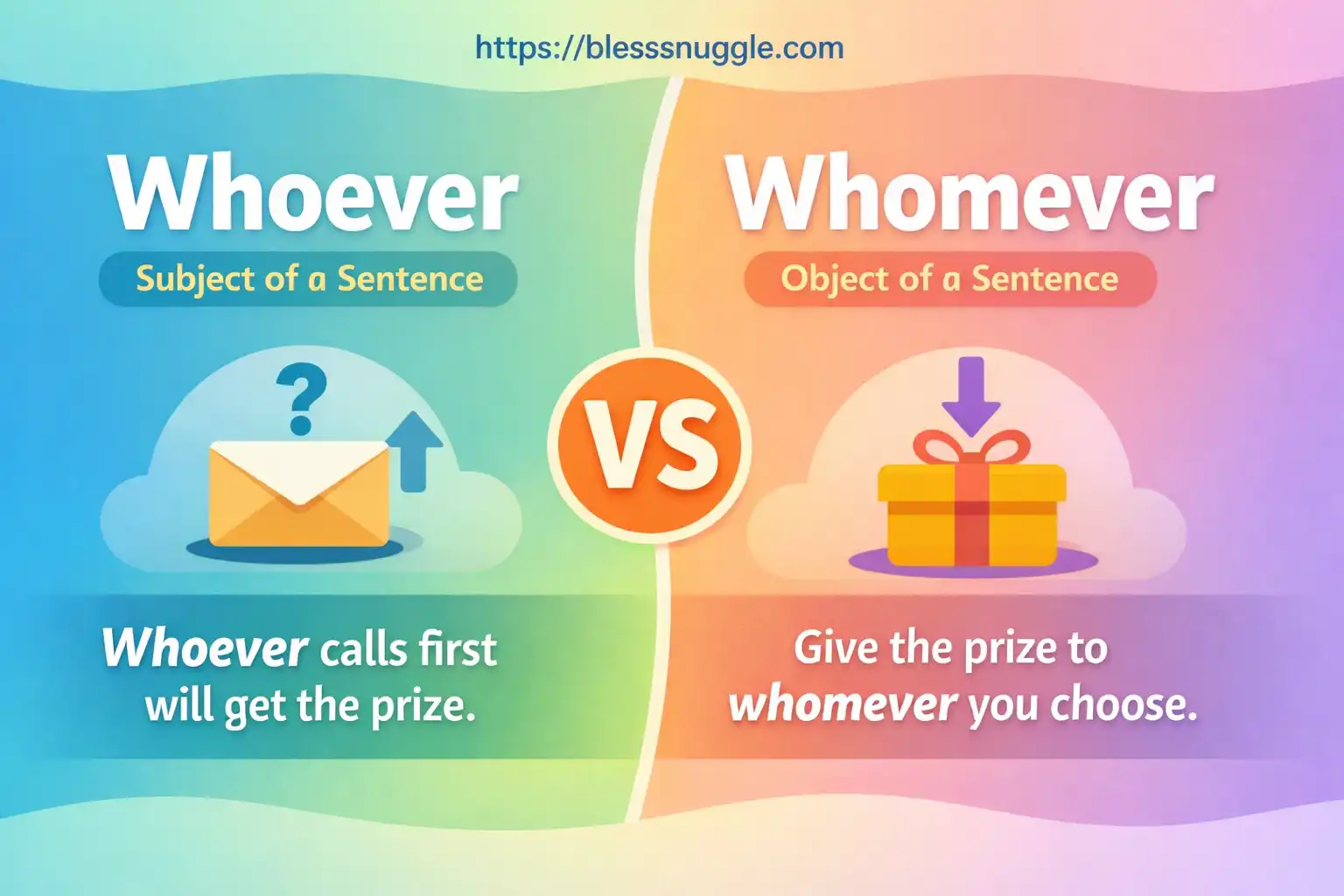
Whoever = subject (does the action)
Whomever = object (receives the action)
Easy rule:
If you can replace it with he, use whoever.
If you can replace it with him, use whomever.
Examples:
- Whoever calls first wins.
- Give the prize to whomever you choose.
The Origin of Whoever or Whomever
Both words come from old English grammar. Long ago, English had many word endings that showed case. Case tells us if a word is a subject or an object.
“Who” became the subject form. “Whom” became the object form. Later, “whoever” and “whomever” followed the same pattern.
However, modern English changed. People stopped using “whom” in daily speech. So today, “whomever” sounds very formal, old, or even unnatural in many sentences.
This is the main reason for confusion now. The rule still exists, but real usage has become softer.
British English vs American English Spelling
There is no spelling difference between British and American English for these words.
| Word | US Spelling | UK Spelling |
| Whoever | Whoever | Whoever |
| Whomever | Whomever | Whomever |
The difference is not spelling. The difference is how often people use “whomever.”
In American English, people rarely use whomever in speech. In British English, it sounds even more formal.
Which Spelling Should You Use?
This is not about spelling. It is about comfort and clarity.
US writing: Use whoever in most cases. It sounds natural.
UK writing: Also prefer whoever unless the sentence is very formal.
Professional or global writing: Use the grammar rule, but avoid sounding stiff.
Today, many editors accept whoever where whomever was once required, because it reads more smoothly.
Common Mistakes with Whoever or Whomever
Writers often try to sound formal. So they use whomever too much.
❌ Give the ticket to whoever arrives first.
✅ Give the ticket to whomever arrives first.
❌ Whomever wants to join may come.
✅ Whoever wants to join may come.
The mistake happens when people forget to check if the word is a subject or an object.
Whoever or Whomever in Everyday Examples
You see these words in daily life more than you think.
Emails
Please forward this to whoever is responsible.
Address the letter to whomever you choose.
News
- Whoever wins the vote will lead the team.
- The award goes to whomever the judges select.
Social media
- Whoever did this, great job!
- Give credit to whomever helped you.
Professional writing
- The contract will be given to whomever qualifies.
- Whoever signs first gets the seat.
Whoever or Whomever – Usage Patterns & Search Interest
Many learners search this topic because grammar tools flag it. Students worry during exams. Writers hesitate during formal emails.
Editors often see overuse of whomever because people think it sounds smarter.
One real problem happens in business emails. A writer may say:
“Send this to whomever is in charge.”
This sounds correct, but it feels stiff and unnatural.
So the better choice today is often:
“Send this to whoever is in charge.”
Comparison Table
| Feature | Whoever | Whomever |
| Meaning | Person doing the action | Person receiving the action |
| Part of speech | Subject pronoun | Object pronoun |
| Context of use | Common, natural | Formal, rare |
| Formal vs informal | Works in both | Mostly formal |
| Common mistake | Used too little | Used too much |
| Correct example | Whoever calls wins | Give it to whomever you pick |
FAQs
Is whoever the same as whomever?
No. One is a subject. One is an object.
Which one is correct in formal writing?
Both are correct. It depends on grammar, not formality.
Can they be used interchangeably?
Not by rule. But in modern use, whoever often replaces whomever.
Why do people confuse them?
Because “whom” is rare in daily speech.
Can grammar tools catch this mistake?
Yes. Most tools check subject and object use.
Is there a British vs American difference?
No spelling change. Only usage comfort differs.
Should I avoid whomever?
You can, unless the sentence clearly needs an object form.
Conclusion
This small grammar choice feels big because it stops your writing flow. You pause, you think, and you lose time. However, the rule is very simple when you see it clearly.
Whoever does the action.
Whomever receives the action.
But modern English is softer now. So in many sentences, whoever sounds more natural and still correct to readers.
Overall, the mistake to avoid is using whomever just to sound formal. That often makes the sentence feel heavy. Instead, check the role in the sentence. Replace the word with he or him. The right choice becomes clear.
Finally, remember this easy rule:
He = whoever. Him = whomever.

I am Ethan Blake, a passionate writer dedicated to crafting heartfelt messages that spread love, joy, and inspiration.