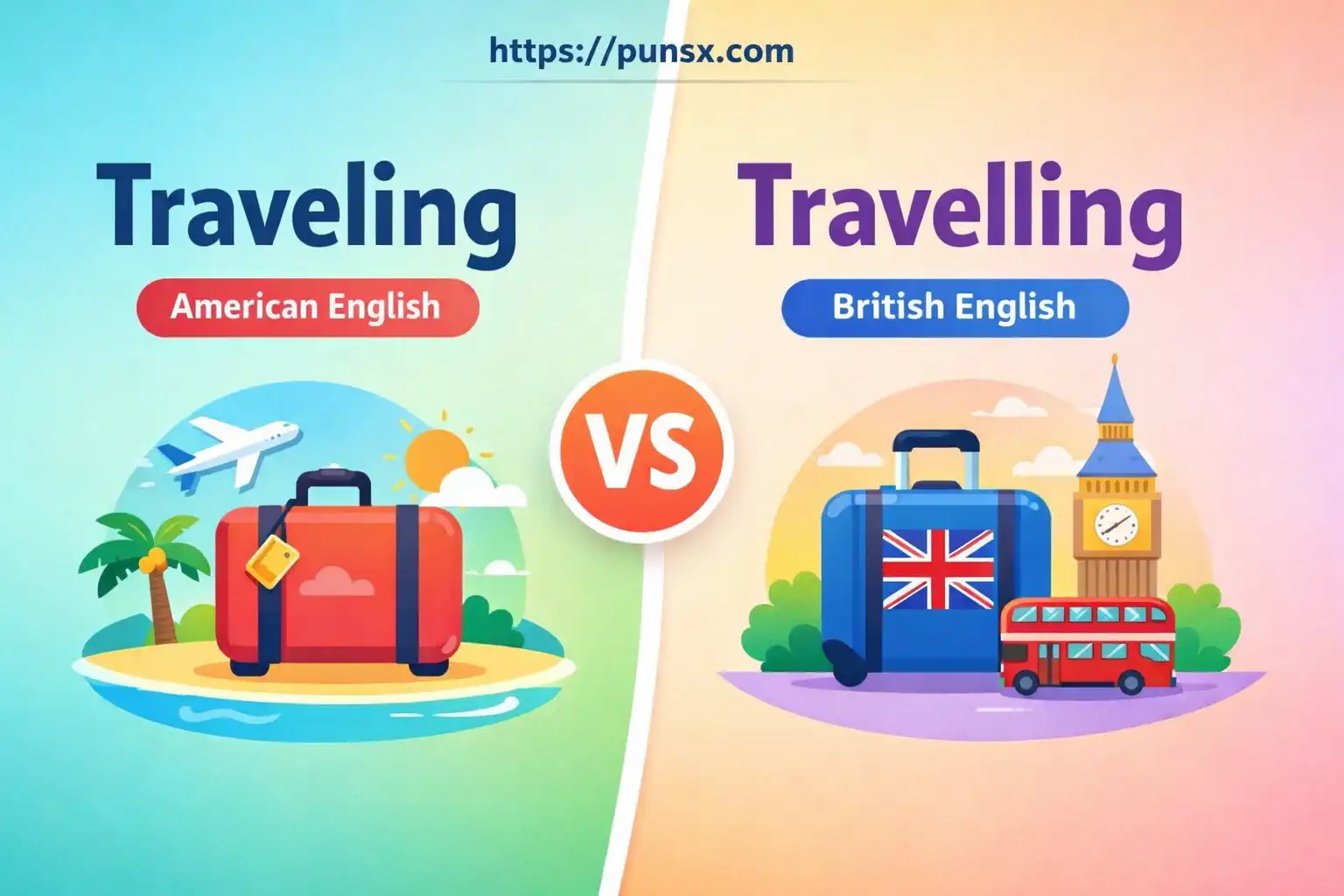
Have you ever wondered if it’s “traveling” or “travelling”? This simple question often confuses people, especially when writing for different audiences. If you’ve seen both spellings, you’re not alone. Writers, students, and even professional editors sometimes struggle with this difference. The reason? Both spellings are correct, but they’re used in different parts of the world.
In this article, we’ll clear up this confusion. We’ll explain why the two spellings exist, how to use them correctly, and the context in which each one fits best. By the end, you’ll feel confident about which spelling to use based on your audience and location.
Traveling vs. Travelling – Quick Answer
The difference between “traveling” and “travelling” is all about geography:
- Traveling: Commonly used in American English.
- Travelling: Preferred in British English and other Commonwealth countries.
Example:
- Traveling: I’m traveling to New York next week.
- Travelling: She is travelling to London this summer.
Simple Rule: If you’re writing for an American audience, use traveling. If your audience is British or from the Commonwealth, use travelling.
The Origin of Traveling/Travelling
The difference between “traveling” and “travelling” comes from the evolution of the English language.
- “Traveling” is the American English form, following a simplified spelling rule where words ending in “-el” drop the extra “l.” This style of American English focuses on ease and speed of writing.
- “Travelling” is the British English version, where the double “l” is retained. British English has a more traditional approach to spelling, often keeping letters like these that might be dropped in other variations of English.
The reason for the two spellings today is a result of different spelling conventions developed over time in the United Kingdom and the United States.
British English vs. American English Spelling
Now, let’s talk about the real difference between these two spellings:
- American English uses “traveling” with a single “l.”
- British English prefers “travelling” with a double “l.”
Here’s a quick comparison:
| Spelling | Region | Example Sentence |
| Traveling | American English | I am traveling to Paris for business. |
| Travelling | British English | She is travelling to Tokyo on holiday. |
Why This Difference Exists
The American approach tends to favor simpler spellings, often dropping extra consonants in words, while British English retains more traditional forms.
Which Spelling Should You Use?
The correct spelling depends on your audience:
- For American readers: Use traveling.
- For British or Commonwealth readers: Use travelling.
If you are writing for a global audience or in a professional setting, consistency is key. Choose one spelling and stick with it throughout your document.
Common Mistakes with Traveling/Travelling
Even experienced writers sometimes make mistakes when using these words. Here are some of the most common errors:
- Incorrect: I’m travelling to the office today.
Correct: I’m traveling to the office today. (for American English) - Incorrect: She is traveling to Australia next month.
Correct: She is travelling to Australia next month. (for British English)
Mistakes like these often happen when a writer is unsure of which audience they are targeting. If you’re writing for a global audience, always check if you need to adapt for American or British conventions.
Traveling/Travelling in Everyday Examples
Here’s how both forms are used in different contexts:
- Emails:
- “I am traveling this weekend, so I will be unavailable.” (American)
- “I am travelling for work this week.” (British)
- News:
- “The government is promoting safer traveling.”
- “Millions are travelling across Europe during the holiday season.”
- Social Media:
- “Can’t wait for my traveling adventure to begin! #TravelingUSA”
- “She’s been travelling the world, sharing incredible stories.”
- Professional Writing:
- “We’re traveling to discuss the new project proposal.” (American)
- “I’ll be travelling to give the keynote address next week.” (British)
Traveling/Travelling – Usage Patterns & Search Interest
“Traveling” and “travelling” are searched for quite often, especially by students, ESL learners, and even professionals preparing content for international audiences.
- ESL learners often search for the correct spelling, especially when writing for a specific region.
- Writers and editors also search for these terms when they’re editing content for American or British clients.
Misusing these spellings can cause confusion, especially if the text appears inconsistent or doesn’t match the expected spelling conventions of the reader.
Comparison Table
| Feature | Traveling (US) | Travelling (UK) |
| Meaning | To go from one place to another | To go from one place to another |
| Part of Speech | Verb (present participle) | Verb (present participle) |
| Context of Use | American English | British English |
| Formal vs Informal | Used in all contexts | Used in all contexts |
| Common Mistakes | Incorrectly using “travelling” in American English | Incorrectly using “traveling” in British English |
| Correct Example | I am traveling to New York. | I am travelling to London. |
Semantic FAQs
- Is traveling the same as travelling?
No, “traveling” is American English, and “travelling” is British English. - Which one is correct in formal writing?
Both are correct, but it depends on whether you’re writing for an American or British audience. - Can they be used interchangeably?
Yes, but only if your audience is okay with mixed spelling. Otherwise, it’s best to choose one. - Why do people confuse them?
They confuse them because both are correct, but each is used in different regions. - Can grammar tools catch this mistake?
Yes, grammar tools usually highlight regional spelling differences, so you can correct them easily. - Is there a British vs. American difference?
Yes, “travelling” is British, and “traveling” is American.
Conclusion
In conclusion, “traveling” and “travelling” are two forms of the same verb, and the choice depends on the region.
- For American English, use traveling.
- For British English, use travelling.
When writing for a specific audience, it’s important to be consistent. Avoid switching between spellings within the same document to keep your writing clear and professional.
Rule to Remember: If your audience is American, use traveling. If British, use travelling.

I am Ethan Blake, a passionate writer dedicated to crafting heartfelt messages that spread love, joy, and inspiration.