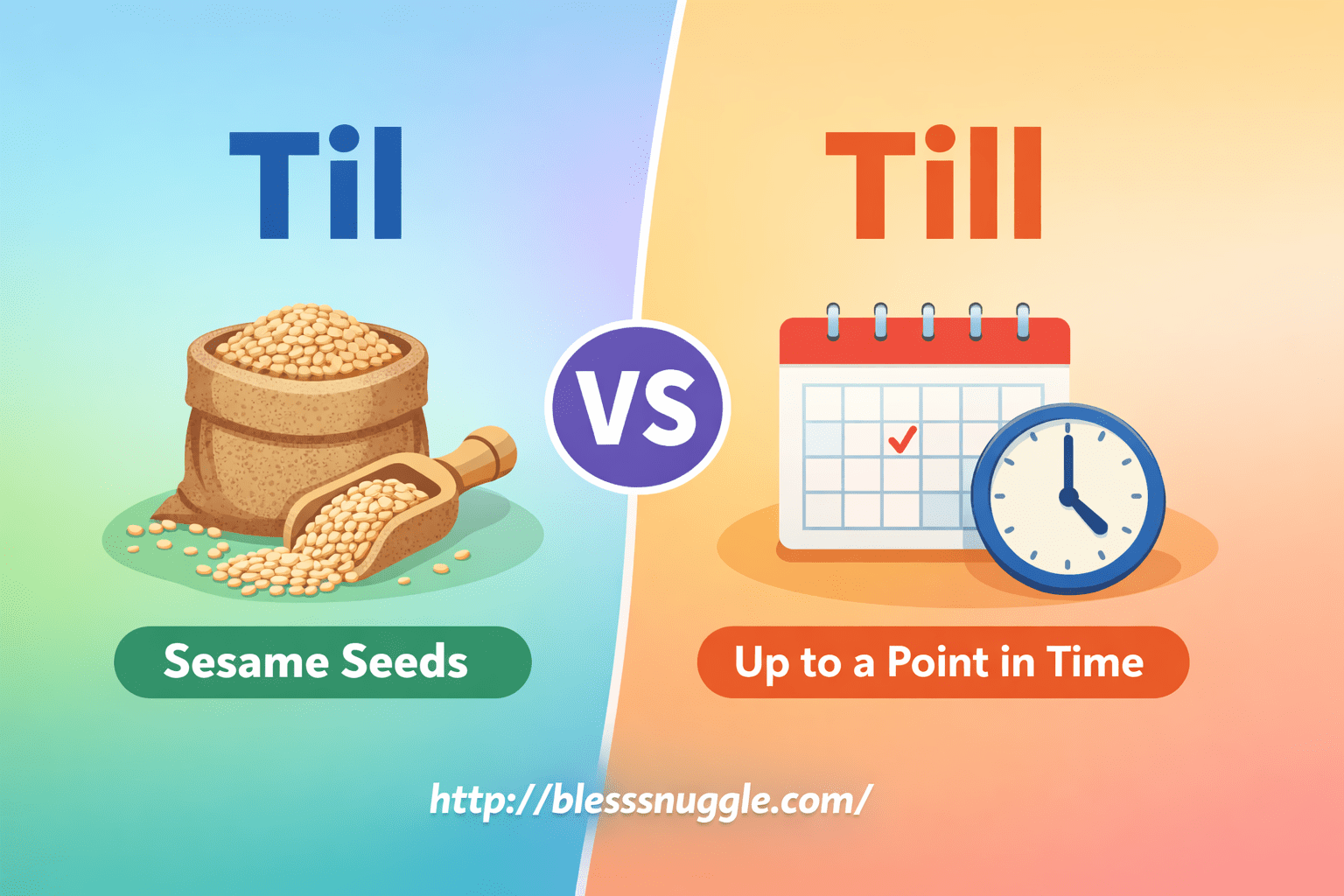
Many people stop while writing and ask a small question: Should I write til or till?
This doubt happens in emails, essays, captions, and even exams. The words look similar, so writers guess. But guessing often leads to mistakes.
You may have seen ’til with an apostrophe. You may have seen till without it. Also, you may have heard that til is wrong. So confusion grows.
This article clears that confusion in a very simple way. You will learn the real history, the correct spelling, and where people go wrong. By the end, you will know exactly what to use and why.
Quick Answer
Till is a real, correct English word.
’Til is a shortened form of until (apostrophe needed).
Til (no apostrophe) is usually considered incorrect.
Easy rule:
Use till in normal writing. Use ’til only in informal style.
The Origin of Til or Till
Many people believe till is a short form of until. However, history shows the opposite.
The word till is older than until. Writers used till in Old English hundreds of years ago. Later, people added a prefix and created until.
So, till is not a shortcut. It is the original word.
Confusion started when writers began shortening until in casual writing. They wrote ’til and then slowly dropped the apostrophe. As a result, til appeared, even though it is not grammatically correct.
Today, this history still affects how people write.
British English vs American English Spelling
There is no spelling difference between British and American English here.
Both forms follow the same rule.
| Form | US English | UK English | Correct? |
|---|---|---|---|
| till | Common | Common | ✅ Yes |
| ’til | Informal | Informal | ✅ Yes (casual) |
| til | Seen online | Seen online | ❌ No |
So, this is not a regional issue. It is a usage issue.
Which Spelling Should You Use?
Your choice depends on how formal your writing is.
Formal writing (essays, work emails, reports): use till
Informal writing (texts, social posts, dialogue): you may use ’til
Avoid “til” without the apostrophe everywhere
Professional editors almost always replace til with till.
Common Mistakes with Til or Till
Writers often make the same errors.
❌ I will wait til tomorrow.
✅ I will wait till tomorrow.
❌ Stay here til I return.
✅ Stay here till I return.
❌ I won’t sleep til midnight.
✅ I won’t sleep ’til midnight. (informal)
✅ I won’t sleep till midnight. (formal)
The main mistake is forgetting that til needs an apostrophe or should be replaced by till.
Til or Till in Everyday Examples
You will see these words in daily life.
Emails
Please stay in the office till 6 PM.
News
The road will remain closed till Monday.
Social media
Can’t wait ’til the weekend!
Professional writing
The contract is valid till December 31.
In serious writing, till feels natural and correct.
Til or Till – Usage Patterns & Search Interest
Students, ESL learners, and even native speakers search this topic often. The confusion usually starts in school when teachers correct til.
Writers also notice grammar tools underline til in red. This creates doubt.
A common real-life problem happens in exams. A student writes til in an essay and loses marks for incorrect spelling. The meaning is clear, but the form is wrong.
So, this small word can affect writing quality and grades.
Quick Comparison Table
| Feature | Till | ’Til | Til |
|---|---|---|---|
| Meaning | Until | Short form of until | Intended short form |
| Part of speech | Preposition / conjunction | Contraction | Non-standard form |
| Context | Formal & informal | Informal only | Incorrect |
| Formal usage | ✅ Yes | ❌ No | ❌ No |
| Common mistake | Thought to be informal | Missing apostrophe | Used instead of till |
| Correct example | Wait till evening | Wait ’til evening | — |
This table removes the confusion quickly.
Semantic FAQs (People Also Ask)
Is til the same as till?
No. Till is correct. Til is not.
Is ’til correct English?
Yes, but only in informal writing.
Which one is correct in formal writing?
Always use till.
Can till and until be used interchangeably?
Yes. Both mean the same.
Why do people write til?
They shorten until and forget the apostrophe.
Do grammar tools catch this mistake?
Yes. Most tools mark til as incorrect.
Is there a British vs American difference?
No. Both follow the same rule.
Conclusion
The confusion between til and till happens because of history and casual writing habits. Many people think till is a shortcut, but it is actually the original word. Then, writers created ’til as a contraction of until. Over time, the apostrophe disappeared, and mistakes began.
Overall, the solution is simple. Use till in almost all writing. Use ’til only when the tone is very casual. Never use til without the apostrophe.
Finally, remember this easy rule:
If you are unsure, write “till.” You will never be wrong.

I am Ethan Blake, a passionate writer dedicated to crafting heartfelt messages that spread love, joy, and inspiration.