You see it while writing an email, pause during an exam. You hesitate when posting online. The words spelled and spelt look almost the same, but they do not feel the same. Many learners, students, and even fluent writers stop and think, “Which one should I use?” That pause is exactly why people search for spelled or spelt.
This confusion happens because English changes by place, not just by rules. Some words are correct in one country but feel strange in another. As a result, writers worry about sounding wrong, informal, or unprofessional. That fear matters because spelling choices can change tone and trust.
In this guide, you will learn the clear difference between spelled and spelt, why both exist, and when each one is right. By the end, you will know what to use with confidence, without guessing, and without checking every sentence twice.
Spelled or Spelt – Quick Answer
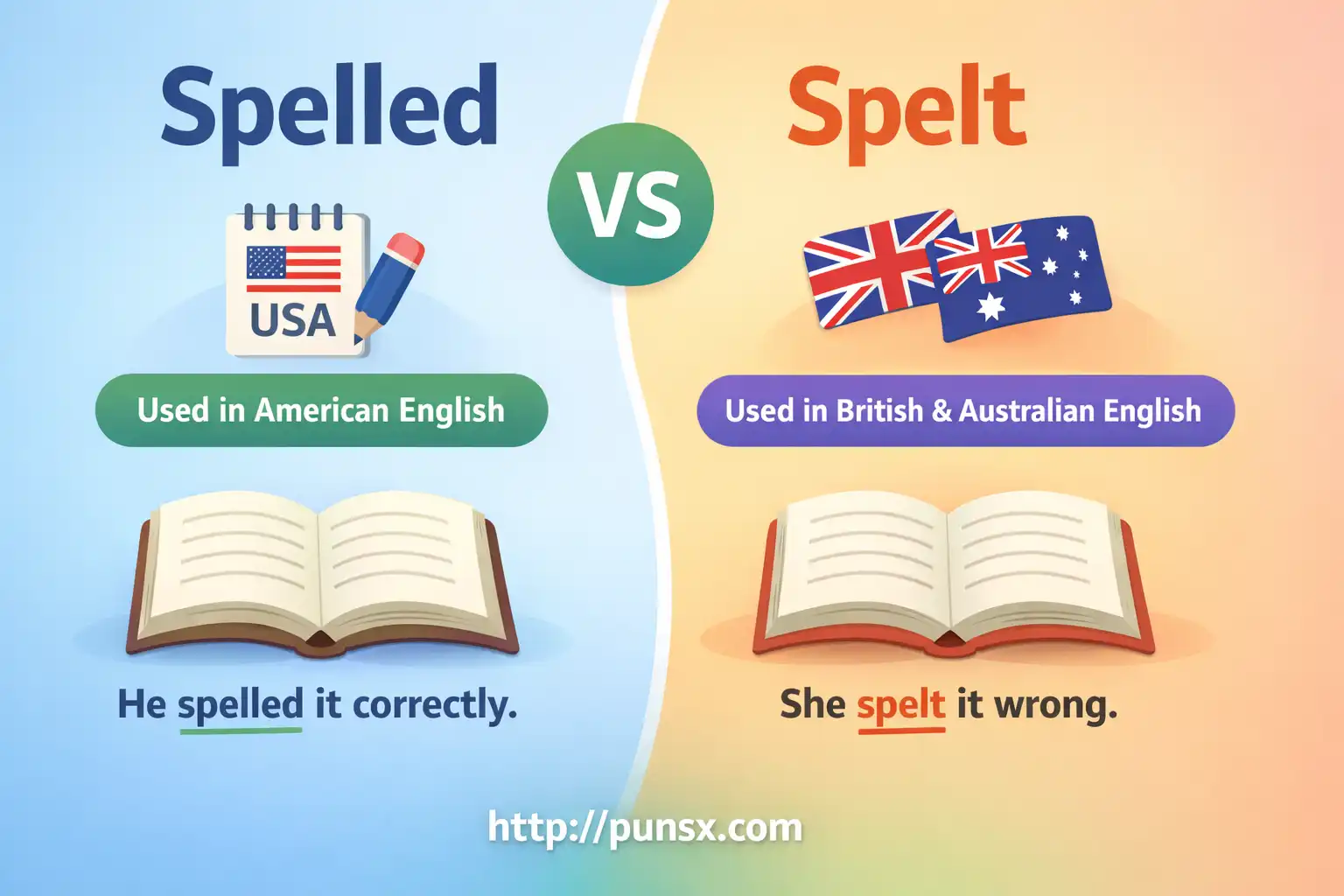
Both “spelled” and “spelt” are correct.
The right choice depends on where your English comes from.
Spelled → American English
Spelt → British English
Easy rule:
If you write for the US, use spelled.
If you write for the UK, use spelt.
Examples:
- She spelled my name wrong. (US)
- He spelt the word correctly. (UK)
The Origin of Spelled or Spelt
Long ago, English verbs had many forms. Some were regular, and some were not. The verb spell followed both paths over time.
In older British English, many verbs used a -t ending in the past tense. Words like learnt, dreamt, and spelt became common. They sounded natural and smooth in speech, so people kept using them.
Later, American English moved toward simpler patterns. Writers preferred -ed endings because they were clearer and more regular. As a result, spelled became the standard form in the United States.
So the confusion today exists because both forms survived, just in different places. Neither one is new, and neither one is wrong. They simply reflect different English traditions.
British English vs American English Spelling
This is where the real difference appears.
In American English, the past tense and past participle of spell is almost always spelled. Editors, teachers, and grammar guides expect it.
In British English, spelt is very common in everyday writing. However, spelled is also accepted, especially in formal or technical text.
In contrast, American English rarely accepts spelt in writing.
Simple comparison
| Region | Preferred form | Accepted form |
| United States | spelled | spelled only |
| United Kingdom | spelt | spelled or spelt |
| Global English | spelled | spelled |
Which Spelling Should You Use?
The best choice depends on your audience.
US audience:Use spelled. It sounds natural and correct.
UK or Commonwealth audience:Use spelt in casual or general writing.Use spelled if you want a more neutral tone.
Global or professional writing:Use spelled. It avoids confusion and feels standard worldwide.
If you are unsure who will read your text, spelled is the safest option.
Common Mistakes with Spelled or Spelt
Writers often make mistakes not because the words are wrong, but because the context is mixed.
❌ He spelt the word wrong. (US audience)
✅ He spelled the word wrong.
❌ The report was spelt correctly. (Formal global report)
✅ The report was spelled correctly.
❌ She spelled aluminium with an extra “i”. (UK informal context)
✅ She spelt aluminium with an extra “i”.
Key idea:
The mistake is not grammar. The mistake is audience mismatch.
Spelled or Spelt in Everyday Examples
Emails
You spelled my last name incorrectly.
I noticed you spelt the address wrong.
News
- The witness spelled the suspect’s name for the court.
- The newspaper spelt the town name incorrectly.
Social Media
- Did I spell this right?
- Oops, I spelt it wrong 😅
Formal or Professional Writing
- All technical terms are spelled according to US standards.
- Key names were spelled accurately in the document.
Spelled or Spelt – Usage Patterns & Search Interest
People search for spelled or spelt because they see both forms online. Students notice one version in books and another on websites. ESL learners hear teachers say one thing but read another.
Writers often confuse them when switching between US and UK sources. Editors usually see this mistake when a text mixes styles, especially in blogs and academic writing.
One real problem appears in resumes or exams. Using spelt in an American setting can look informal or incorrect, even though the word itself is valid. That small detail can affect how writing is judged.
Comparison Table: Spelled vs Spelt
| Feature | Spelled | Spelt |
| Meaning | Past tense of “spell” | Past tense of “spell” |
| Part of speech | Verb | Verb |
| Main usage | American English | British English |
| Formal tone | Yes | Sometimes |
| Informal tone | Yes | Yes |
| Common mistake | Used in UK informal text | Used in US writing |
| Correct example | She spelled it correctly. | He spelt it correctly. |
FAQs About Spelled or Spelt
Is spelled the same as spelt?
Yes. They have the same meaning. The difference is regional usage.
Which one is correct in formal writing?
Spelled is safest for formal and global writing.
Can spelled and spelt be used interchangeably?
Sometimes, but only in British English. Not in American English.
Why do people confuse spelled or spelt?
Because both forms exist and appear in real writing.
Can grammar tools catch this mistake?
Some tools do, but many allow both forms.
Is there a British vs American difference?
Yes. This difference is the main reason both words exist.
Conclusion
Overall, spelled and spelt mean the same thing, but they live in different places. That is the key idea to remember. American English strongly prefers spelled, while British English often uses spelt, especially in everyday writing.
The biggest mistake is not choosing the “wrong” word. The real mistake is using the right word in the wrong context. That can confuse readers or make writing feel off.
In short, if your audience is global or American, use spelled. If your audience is British and the tone is casual, spelt is fine. Finally, when you are unsure, choose spelled. It works almost everywhere and keeps your writing clear, simple, and safe.

I am Ethan Blake, a passionate writer dedicated to crafting heartfelt messages that spread love, joy, and inspiration.