You read a sentence and stop. Something feels odd.
“Let me segway into the next topic.”
It looks right. It sounds right. But it is wrong.
Many people type segway when they mean segue. This mistake happens in emails, blogs, social posts, and even news articles. Spell-check often misses it because Segway is a real word. It is the name of a two-wheel scooter. So the error slips through easily.
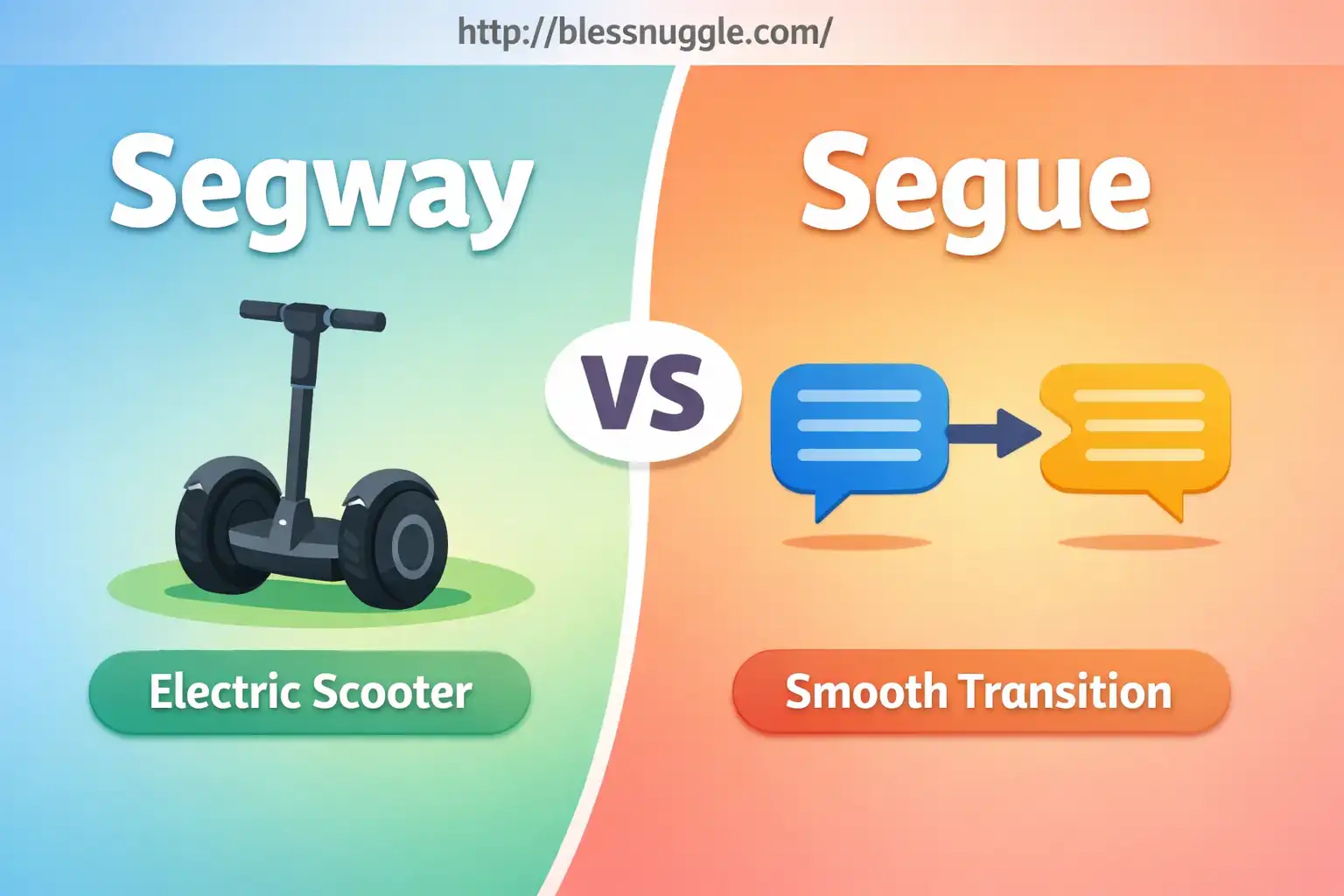
This confusion matters because the two words are not related. They do not share meaning. They do not share grammar. One is a verb about smooth transition. The other is a brand name for a machine.
In this guide, you will learn the clear difference. You will see when to use segue and why segway is almost always wrong in writing. You will also learn the origin, usage, and simple rules that make this mistake easy to avoid forever.
Segway or Segue – Quick Answer
Segue = a smooth move from one topic to another (verb)
Segway = a two-wheel electric scooter (brand name)
Examples
- “She will segue into the next idea.”
- “He rides a Segway at the park.”
Easy rule:
If you are talking about writing or speaking → use segue.
The Origin of Segway or Segue
The word segue comes from Italian. It means “it follows.” Musicians used it first. They used it when one part of music flowed into the next without stopping. Later, writers and speakers used it for smooth topic changes.
The word Segway came much later. It is the brand name of a personal transporter made by Segway Inc.. The company chose the name because the scooter moves smoothly, like a musical segue.
This is where confusion started. The words sound the same. They look similar. But they were born for very different reasons.
Now, many people hear the sound “seg-way” and spell it like the scooter. That mistake spreads online because it looks logical, but it is incorrect.
British English vs American English Spelling
There is no spelling difference between British and American English for this word.
| Word | US Spelling | UK Spelling | Meaning |
| segue | segue | segue | smooth transition in speech or writing |
| Segway | Segway | Segway | brand name scooter |
However, the confusion happens in both regions because the pronunciation is the same.
Which Spelling Should You Use?
US audience → use segue for transitions
UK / Commonwealth → use segue for transitions
Global writing → always use segue when moving between ideas
Use Segway only when you talk about the scooter.
If your sentence is about writing, speaking, presenting, or storytelling, the correct word is always segue.
Common Mistakes with Segway or Segue
Writers often confuse these in fast typing.
❌ “This paragraph will segway into the conclusion.”
✅ “This paragraph will segue into the conclusion.”
❌ “Let me segway to another point.”
✅ “Let me segue to another point.”
❌ “She used a segway between topics.”
✅ “She used a segue between topics.”
The mistake happens because people spell by sound. But English spelling does not always follow sound.
Segway or Segue in Everyday Examples
Emails
“I will segue into the budget discussion.”
News
“The speaker segued into foreign policy.”
Social media
“That story segues perfectly into my next post.”
Professional writing
“This chapter segues into the main argument.”
Real object
“They rented a Segway during the city tour.”
Segway or Segue – Usage Patterns & Search Interest
Many students, ESL learners, bloggers, and even professionals search this phrase. They feel unsure after seeing both spellings online.
Editors often see this error in drafts. Grammar tools sometimes miss it because Segway is a proper noun. So the software thinks it is correct.
A real problem happens in formal writing. If someone writes “segway into the topic” in a report, it looks careless. The reader may doubt the writer’s skill.
This is why the confusion matters. It affects clarity and credibility.
Comparison Table: Segway vs Segue
| Feature | Segue | Segway |
| Meaning | Smooth transition | Electric scooter |
| Part of speech | Verb / noun | Proper noun |
| Context of use | Writing, speaking, music | Transport device |
| Formal vs informal | Used in formal writing | Product name |
| Common mistake | Spelled as “segway” | Used instead of “segue” |
| Correct example | “He will segue into the topic.” | “She rides a Segway.” |
This table removes the confusion quickly.
FAQs – People Also Ask
Is segway the same as segue?
No. Segue is a transition word. Segway is a scooter brand.
Which one is correct in formal writing?
Use segue when moving between ideas.
Can they be used interchangeably?
Never. They have different meanings.
Why do people confuse them?
They sound the same when spoken.
Can grammar tools catch this mistake?
Not always, because Segway is a real word.
Is there a British vs American difference?
No. Both use segue for transitions.
Is segue a verb or noun?
It can be both. Most often, it is used as a verb.
Conclusion
Overall, this confusion is easy to fix once you see the difference. Segue belongs to writing and speaking. It shows a smooth move from one idea to another. Segway belongs to roads and parks. It is a machine you can ride.
The mistake happens because the words sound the same. Many people type what they hear. But the meanings do not match at all.
Finally, remember this simple rule:
If you are changing topics, use segue.
If you are riding something, use Segway.
This one rule will keep your writing correct every time.

I am Ethan Blake, a passionate writer dedicated to crafting heartfelt messages that spread love, joy, and inspiration.