Have you ever been unsure about whether to use “paid” or “payed”? It’s a common mistake that many writers, students, and even native English speakers make. While both words seem similar, they actually have distinct meanings and uses. This confusion often arises because “pay” is a regular verb in most cases, and “pay” vs. “payed” seems just like a small change in spelling. But getting this right can make a significant difference in the clarity of your writing.
In this article, we will clear up the confusion between “paid” and “payed.” By the end, you’ll know exactly when to use each word, how to avoid common mistakes, and why understanding this distinction matters in both casual and professional writing.
Paid – Quick Answer
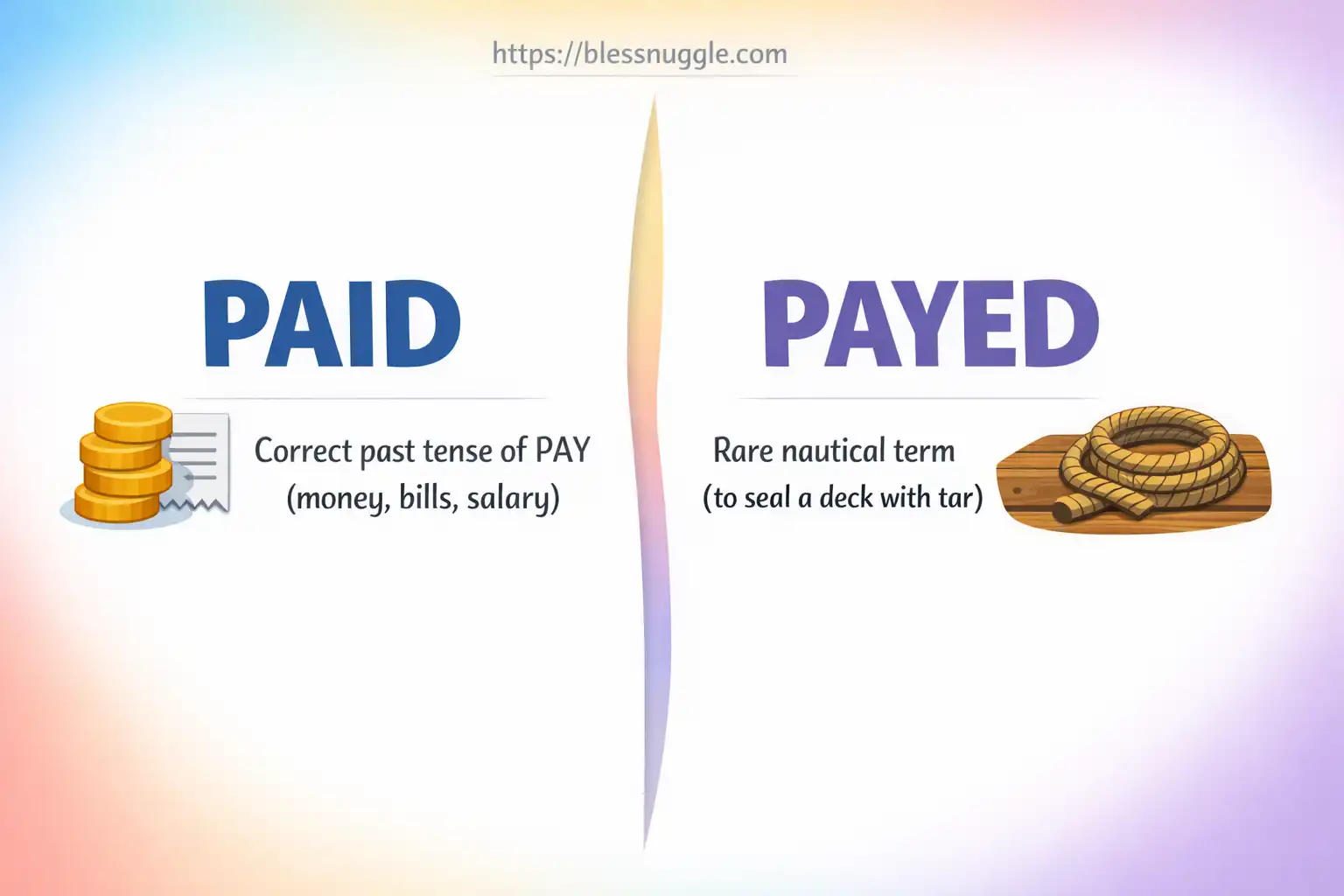
- “Paid” is the correct past tense and past participle form of the verb “pay.”
- “Payed” is an incorrect form that is rarely used in modern English. The only correct usage of “payed” is in relation to nautical terms, such as “paying” a ship with tar to seal it.
Example:
- ✅ “I paid for the tickets yesterday.”
- ❌ “I payed for the tickets yesterday.”
The Origin of Paid vs. Payed
The confusion between “paid” and “payed” stems from the fact that English verbs sometimes follow irregular patterns. “Paid” is the standard past tense and past participle form of “pay,” while “payed” used to be considered a valid alternative.
The word “pay” comes from Old French payer, meaning “to settle a debt,” which is why “paid” remains the proper form in today’s English. “Payed” as a past form was common in older English texts, particularly around the 16th century, but it has fallen out of common use.
So why do some still use “payed” today? It’s usually a mistake or confusion arising from the English language’s complex history and inconsistent verb rules.
British English vs. American English Spelling
Both British and American English use “paid” as the correct form of the past tense of “pay.” There is no significant difference in the spelling of “paid” between the two dialects. However, confusion often arises because some speakers might still try to use “payed,” influenced by regional dialects or historical usage.
| Spelling | Correct Form | Region |
| Payed | Incorrect | Both (Rarely used) |
| Paid | Correct | Both |
Which Spelling Should You Use?
In both British and American English, you should always use “paid” when referring to the past tense of “pay.”
- For US English: Stick with “paid.”
- For UK/Commonwealth English: Also use “paid.”
- For global or professional writing: “Paid” is universally accepted.
There’s no difference in the spelling of “paid” between the two. So no matter where you are, always choose “paid” unless you’re discussing something historical or nautical.
Common Mistakes with Paid vs. Payed
Here are a few common mistakes to watch out for:
- ❌ Incorrect: “I payed the bill this morning.”
✅ Correct: “I paid the bill this morning.” - ❌ Incorrect: “She has payed the rent.”
✅ Correct: “She has paid the rent.”
People often confuse “payed” because it seems to follow regular verb patterns, but in reality, it’s an old form that has mostly been replaced by “paid” in modern English.
Paid vs. Payed in Everyday Examples
Let’s look at how “paid” and “payed” would appear in different types of writing:
In Emails:
- Correct: “I paid for the product last week, and I’m still waiting for delivery.”
- Incorrect: “I payed for the product last week.”
In News:
- Correct: “The company paid its employees a bonus.”
- Incorrect: “The company payed its employees a bonus.”
On Social Media:
- Correct: “Just paid for my concert tickets!”
- Incorrect: “Just payed for my concert tickets!”
In Formal Writing:
- Correct: “The bank paid the loan amount in full.”
- Incorrect: “The bank payed the loan amount in full.”
Paid – Usage Patterns & Search Interest
In general, “paid” is the more commonly searched term. Students, ESL learners, and writers frequently make the mistake of using “payed,” but this error tends to decrease as their English improves. Misusing “payed” in professional or academic writing can cause confusion or make the writer appear less credible.
An example of where the misuse of “payed” could cause confusion is in a business email where clarity is crucial. Using the incorrect form might leave your reader unsure whether you’re referring to a past payment, causing a small but unnecessary hiccup in communication.
Comparison Table
| Feature | Paid | Payed |
| Meaning | Past tense of “pay” | An outdated or incorrect form |
| Part of Speech | Verb (past tense, past participle) | Verb (rarely used, specific context) |
| Context of Use | Everyday use, business, formal | Nautical (historical) |
| Formal/Informal | Both formal and informal | Informal and outdated |
| Common Mistakes | People often misspell it as “payed” | “Payed” is used incorrectly |
| Correct Example | “I paid for the groceries.” | ❌ “I payed for the groceries.” |
FAQs About Paid vs. Payed
Is “Paid” the Same as “Payed”?
No, “paid” is the correct form for the past tense of “pay.” “Payed” is an outdated form, mostly used in nautical contexts.
Which One Is Correct in Formal Writing?
“Paid” is the correct form to use in all types of writing, including formal.
Can They Be Used Interchangeably?
No, “payed” is not interchangeable with “paid” in modern English.
Why Do People Confuse Them?
“Payed” looks similar to regular past tense verbs, which is why it’s mistakenly used instead of “paid.”
Can Grammar Tools Catch This Mistake?
Yes, most grammar tools, including Grammarly and others, will flag “payed” as incorrect and suggest “paid.”
Is There a British vs. American Difference?
No, there is no difference. Both British and American English use “paid.”
Conclusion
In short, the difference between “paid” and “payed” is clear: “paid” is the correct form in modern English, while “payed” is an outdated and incorrect version. Remember, “paid” is always the right choice, whether you’re writing an email, news article, or social media post. The key rule to remember is simple: If you’re talking about paying for something in the past, always use “paid.” So next time you’re unsure, just go with “paid” and you’ll be good to go!

I am Ethan Blake, a passionate writer dedicated to crafting heartfelt messages that spread love, joy, and inspiration.