People search bougie or boujee because they see both spellings everywhere. One friend writes it one way. A post uses another. Then a song uses it again. So confusion starts, and it feels small, but it keeps coming back.
This confusion matters because the word shows tone. It can sound playful, proud, or rude. When you spell it wrong for the context, the meaning can shift. Readers may pause, laugh, or misunderstand you. That is frustrating, especially for students, ESL learners, and new writers.
So this article solves one clear problem. It explains what bougie or boujee really means, where it comes from, and which spelling works best today. By the end, you will know when to use it, when to avoid it, and how to remember the difference without stress.
Bougie or Boujee – Quick Answer
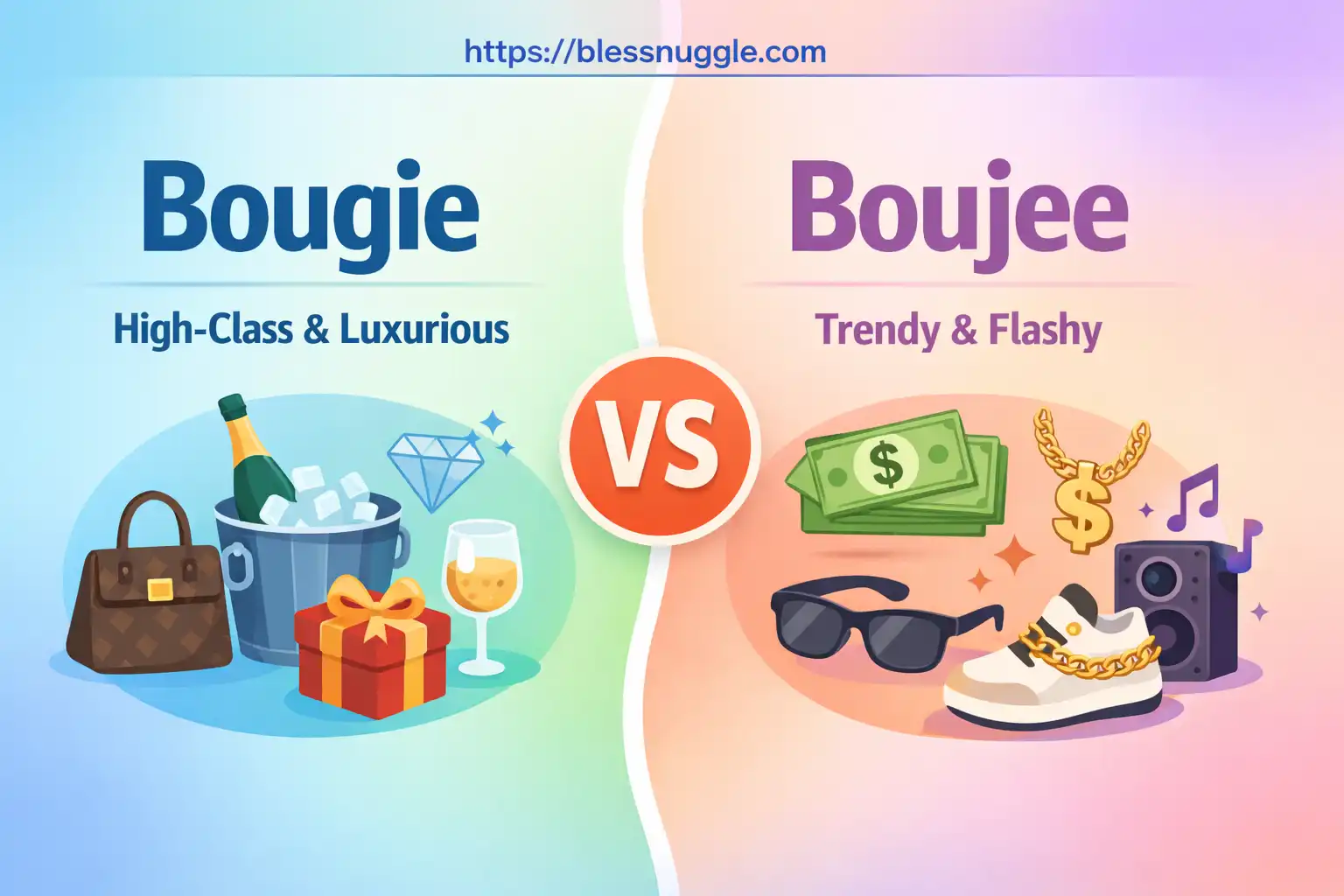
Bougie and boujee mean the same thing.
They describe someone or something that feels fancy or high-class.
Bougie is the original spelling.
Boujee is a modern, slang-style spelling.
Easy rule:
Use bougie in writing. Use boujee in casual texts or social media.
Example:
- “That café feels bougie.”
- “She posted a boujee brunch photo.”
The Origin of Bougie or Boujee
The word started a long time ago. Bougie comes from the French word bourgeois. That word described middle-class people who wanted a better, richer life. Over time, English speakers shortened it to bougie.
Now things changed. Music, pop culture, and social media helped create boujee. People spelled it the way it sounds when spoken fast. So boujee grew as a fun, playful version.
This is why confusion exists today. Both words sound the same. Both feel correct when spoken. But only one has a long history in writing.
British English vs American English Spelling
There is no true British vs American spelling difference here. That surprises many learners, but it is simple.
Bougie appears in both US and UK writing.
Boujee appears mainly in informal American slang.
In contrast to words like colour and color, this word does not change by country. It changes by tone.
| Style | Preferred Form |
| Standard writing | bougie |
| Slang or casual | boujee |
So the difference is about formality, not location.
Which Spelling Should You Use?
The right spelling depends on who will read your words.
For US readers:
Use bougie in essays, articles, or work messages. Use boujee in texts, captions, or jokes.
For UK or Commonwealth readers:
Stick with bougie. The slang form may feel unclear or too informal.
For global or professional writing:
Always choose bougie. It is safer and clearer for all readers.
If you are unsure, bougie is the better default.
Common Mistakes with Bougie or Boujee
Writers often mix tone and spelling. That is the main problem.
❌ This report analyzes boujee consumer habits.
✅ This report analyzes bougie consumer habits.
❌ Her lifestyle is very boujee, according to the article.
✅ Her lifestyle is very bougie, according to the article.
The mistake is not the meaning. The mistake is using a slang spelling in serious writing.
Bougie or Boujee in Everyday Examples
Here is how the word looks in real life.
Emails
“The hotel feels bougie, but it is comfortable.”
News
- “The café offers a bougie dining experience.”
Social media
- “Sunday brunch was so boujee today.”
Formal or professional writing
- “The brand targets a bougie audience.”
Notice how boujee stays casual. Bougie works everywhere.
Bougie or Boujee – Usage Patterns & Search Interest
Search interest for bougie or boujee keeps rising. People see the word online, but they are not sure how to write it.
Students ask about it in class. ESL learners see it in music lyrics. Writers see editors change the spelling. So they search for clarity.
One real-world problem happens in resumes or emails. Writing boujee there can seem careless. That small choice may change how a reader feels about your tone.
So understanding usage is not just about spelling. It is about impression.
Bougie or Boujee Comparison Table
| Feature | Bougie | Boujee |
| Meaning | Fancy, high-class | Fancy, high-class |
| Part of speech | Adjective, noun | Adjective, noun |
| Context of use | Standard writing | Slang, casual |
| Formal vs informal | Semi-formal to neutral | Informal only |
| Common mistakes | Seen as slang only | Used in formal text |
| Correct example | “A bougie restaurant” | “A boujee vibe” |
This table shows one thing clearly. The meaning stays the same, but the tone does not.
Semantic FAQs: Bougie or Boujee
Is bougie the same as boujee?
Yes. They mean the same thing, but the spelling changes the tone.
Which one is correct in formal writing?
Bougie is correct in formal or professional writing.
Can they be used interchangeably?
In casual speech, yes. In writing, it depends on context.
Why do people confuse them?
They sound the same and appear in pop culture often.
Can grammar tools catch this mistake?
Sometimes, but many tools accept both spellings.
Is there a British vs American difference?
No. The difference is about formality, not region.
Conclusion
Overall, bougie or boujee is a spelling choice that signals tone. The meaning stays the same. It describes something fancy or high-status. But the way you spell it tells readers how serious or playful you are.
In short, bougie is the safe and standard form. It works in articles, emails, and school work. Boujee is modern and casual. It fits social media, jokes, and relaxed chats.
The one mistake to always avoid is using boujee in formal writing. That is where confusion and judgment happen. So when in doubt, choose the older spelling.
Finally, remember this simple rule:
Write bougie. Text boujee.

I am Ethan Blake, a passionate writer dedicated to crafting heartfelt messages that spread love, joy, and inspiration.