You write a birthday card. You pause. Should you write aunty or auntie?
Many people stop here. The words sound the same. Both look friendly. So confusion starts, especially for students, ESL learners, and new writers. Some think one is wrong. Others think one is more formal. Then spell-check tools do not help much, so doubt grows.
This article solves that problem in a simple way. You will learn the origin, the spelling rules, and the correct usage in real life. You will also see where mistakes happen and how to avoid them easily.
Aunty or Auntie – Quick Answer
Both aunty and auntie are correct spellings.
They mean the same: a loving, informal way to say aunt.
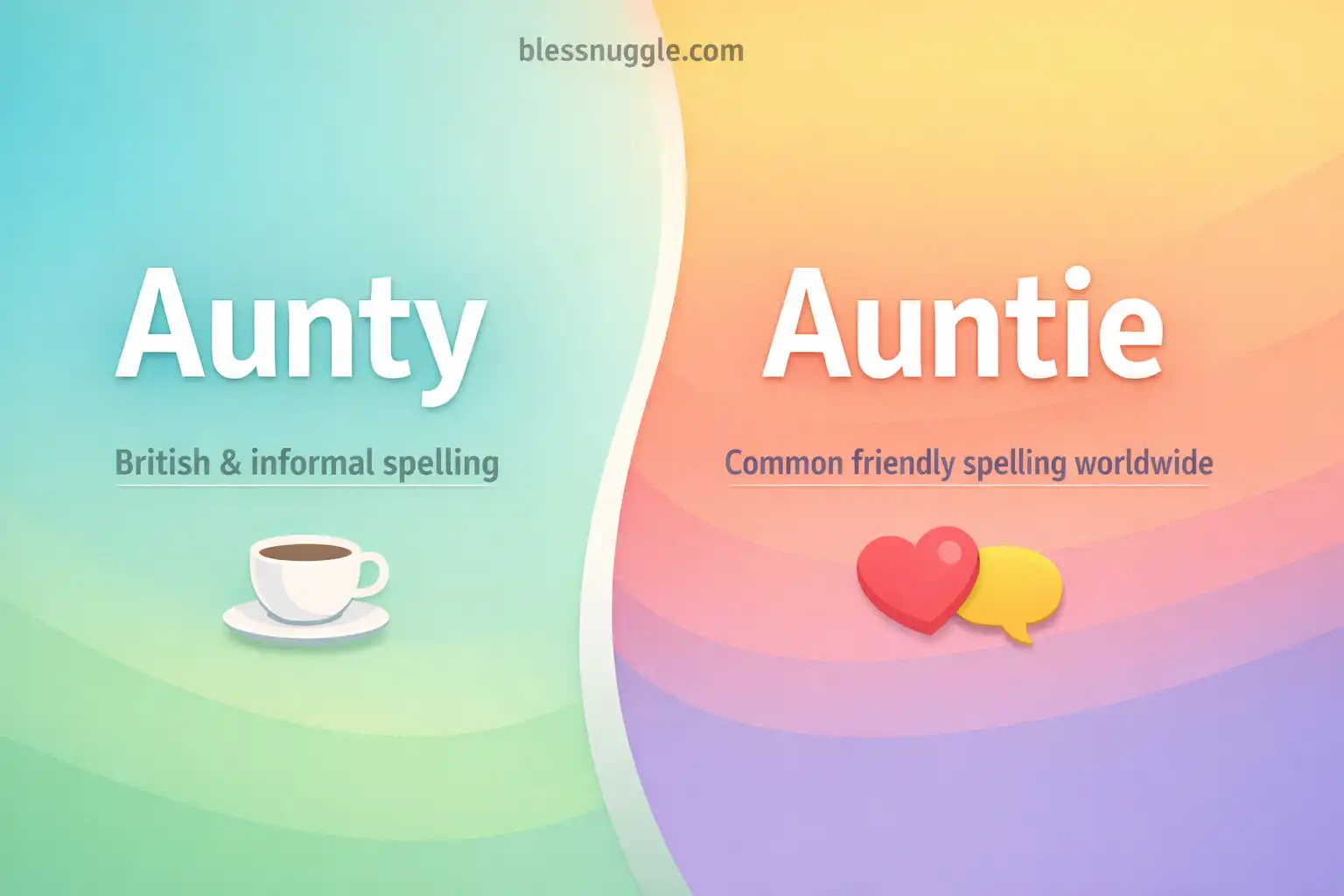
Auntie is more common in British English.
Aunty appears more in American and casual writing.
Easy rule:
Use auntie in UK style writing, and aunty in US or casual writing.
The Origin of Aunty or Auntie
The word comes from Old French ante, which means father’s or mother’s sister. Later, Middle English turned it into aunte. Over time, English speakers added a soft ending sound to show affection. So aunt became auntie and aunty.
This soft ending “-ie” or “-y” often shows warmth in English. Think of dog → doggy or mom → mommy. The same pattern happened here.
Today, the confusion exists because English allows both endings. Writers see both in books, emails, and social media, so they feel unsure which one to choose.
British English vs American English Spelling
Spelling differences often cause this problem.
| Style | Common Spelling | Example |
| British English | Auntie | “I visited my auntie in London.” |
| American English | Aunty | “My aunty lives in Texas.” |
| Casual / Family Use | Both | “Happy birthday, aunty/auntie!” |
However, both spellings appear in both regions. The difference is about preference, not rules.
Which Spelling Should You Use?
Your choice depends on your audience.
For US readers:
Use aunty. It feels natural and familiar.
For UK and Commonwealth readers:
Use auntie. It matches local spelling habits.
For global or professional writing:
Either is fine, but stay consistent in the same document.
If you write a story, email, or card, pick the spelling your family uses. That matters more than rules.
Common Mistakes with Aunty or Auntie
Writers often mix usage or context. Here are common errors:
❌ Auntie is coming to the office meeting.
✅ My aunt is coming to the office meeting.
❌ Dear Auntie Smith, (very formal letter)
✅ Dear Aunt Smith, (formal)
✅ Dear Auntie Smith, (informal)
The mistake happens when people use aunty/auntie in formal or official writing. These forms are warm and personal, not formal.
Aunty or Auntie in Everyday Examples
Emails
“Hi Auntie, thank you for the gift!”
News
Rarely used. News prefers aunt because it is neutral.
Social media
“Out with my favorite aunty today!”
Professional writing
Avoid both. Use aunt instead.
These examples show that the word lives mostly in family talk and casual writing.
Aunty or Auntie – Usage Patterns & Search Interest
Many users who search this term are:
Students learning English
ESL learners
Writers editing family stories
People writing cards or messages
A real problem happens when someone writes a formal letter or school essay and uses auntie. Teachers often mark it as too informal. So the confusion matters in real writing situations.
Comparison Table: Aunty vs Auntie
| Feature | Aunty | Auntie |
| Meaning | Loving form of aunt | Loving form of aunt |
| Part of speech | Noun | Noun |
| Context | Casual, family use | Casual, family use |
| Formal use | Not suitable | Not suitable |
| Region preference | More US | More UK |
| Common mistake | Used in formal writing | Used in formal writing |
| Correct example | “My aunty baked cookies.” | “My auntie called me.” |
This table shows there is no meaning difference, only spelling preference.
FAQs
Is aunty the same as auntie?
Yes. Both mean the same and show affection.
Which one is correct in formal writing?
Neither. Use aunt in formal contexts.
Can they be used interchangeably?
Yes, but stay consistent in the same text.
Why do people confuse them?
Because both spellings are accepted and sound identical.
Can grammar tools catch this mistake?
Usually no. Tools accept both spellings.
Is there a British vs American difference?
Yes. British English prefers auntie. American English often uses aunty.
Do both show affection?
Yes. That is their main purpose.
Conclusion
The confusion between aunty and auntie is simple once you see the pattern. Both words come from the same origin. Both show warmth and family love. And both are correct in casual English.
The real issue is not spelling. The real issue is context. Many writers use these words in formal places where they do not fit. That is the mistake to avoid.
Overall, choose the spelling that matches your audience. Use auntie for UK style. Use aunty for US style. And in formal writing, always return to the neutral word aunt.
Easy rule to remember:
If the tone is warm and personal, aunty or auntie works. If the tone is formal, use aunt.

I am Ethan Blake, a passionate writer dedicated to crafting heartfelt messages that spread love, joy, and inspiration.